In recognition of Mental Health Awareness Week on 10th-16th May, we invited Jocelyn Catty to discuss the impact of the pandemic, including the lockdowns, on adolescent mental health in the UK. In this blog, Jocelyn reflects on the Research Article she wrote during the first lockdown and shares her observations from the past year.
The UK is gradually emerging from its third lockdown during the pandemic. As restrictions are lifting, we invited Trystan Leng, a mathematical epidemiologist based at the University of Warwick to discuss his analysis made in the first UK lockdown to model a way that would safely allow individuals to increase their physical social interactions beyond their household while limiting the additional risk of infection.
Cinzia Greco, University of Manchester, and Ignacia Arteaga, University of Cambridge, wrote this blog along with their co-authors, about their Open Letter published on Wellcome Open Research. In this piece they share thoughtful insight on the importance of social science for cancer research and care, and remind us to remain critical on what problems already existed in cancer research and care in the UK before Covid-19 and which difficulties have arisen as a direct result.
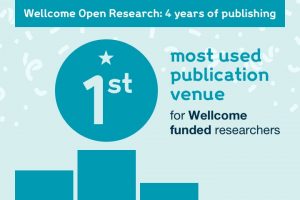
Wellcome Open Research, developed and run by F1000Research, is now the single most used publishing venue for Wellcome funded researchers.
In 2020 the Wellcome Open Research (WOR) publishing platform reached a significant milestone when it became the single most used venue for Wellcome-funded researchers to share their research findings.
In this blog post, Robert Kiley, Head of Open Research, Wellcome, and Michael Markie, Publishing Director, F1000, provide an analysis of publishing activity on the WOR platform and preview some of the initiatives we have planned for 2021.
There to advise, encourage and support you on best data practices. In this piece, data stewards from different institutions around the globe have kindly shared their knowledge and expertise. For those in need of inspiration and useful pointers, read through these pieces of advice on why and how to openly share your data.
As Editorial Assistants, our peer reviewers will often say to us “I won’t review the Study Protocol, but I will review the results”, which made us wonder why Study Protocols are disregarded by some? In this blog post, Charlie Vickers, Senior Editorial Assistant, explains why Study Protocols are important – not only for science in general, but as part of the Wellcome Open Research model too.
In this Q&A, Robert Smith, University of Sheffield, discusses the study he and his team carried out, published on Wellcome Open Research, investigating possible disparities in participation in parkrun, why they occur, and the opportunities to reduce potential barriers.
Muzlifah Haniffa is a co-coordinator of the Developmental Biological Network within the Human Cell Atlas (HCA) initiative. In this blog, she tells us more about this global initiative, requiring multidisciplinary expertise, and how its ambitious effort to map every cell in the human body can improve our understanding of human health, as well as diagnosing, monitoring, and treating disease.
Covid-19 is an emerging infectious disease, for which our understanding is rapidly and constantly changing. This is why Living systematic reviews (LSR) could be a beneficial approach to both prevent systematic reviews from going out of date and to keep up with rapidly moving fields. In this blog post, James Barker, discusses this and explains why LSRs are a valuable and practical way of monitoring and gathering available evidence on Covid-19.