Robert Kiley, Head of Open Research, Wellcome, and Michael Markie, Publisher, F1000 Platforms, provide an overview of the type of research that has been published since launch of Wellcome Open Research.
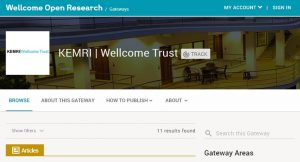
We’ve added a new functionality on Wellcome Open Research. Gateways offer Wellcome-funded researchers and communities the opportunity to create their own branded “publishing home” for their research outputs designed to suit their needs. The first Gateway to be launched on the platform is for one of the Africa programmes, the KEMRI-Wellcome Trust Research Programme (KWTRP), Kenya.
Lived Lives: A Pavee Perspective was an artist-science collaboration project aimed at addressing suicide in the Irish Traveller Community. he results of this collaboration were published as a Research Article and openly peer reviewed on Wellcome Open Research. In this guest blog, researchers, Kevin Malone and Eimear Cleary, and artist, Seamus McGuiness, describe their work.
Authors of an article published on Wellcome Open Research, María Rodríguez-López and Jürg Bähler, discuss why they published their work here. They invited Damien Hermand and Carlo Yague-Sanz to review as they knew their interest in the work from a community email list. Damien and Carlo give their views on the open peer review process.
Author survey shows that publication speed and the ability to share a variety of research outputs are the primary reasons why authors publish on the Wellcome Open Research publishing platform.
Researchers Irene Omedo and Philip Bejon explain how targeted malaria control could benefit the surrounding community and discuss the benefit of post publication peer review.
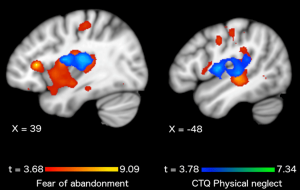
A recently published article by Dr Liana Romaniuk and colleagues investigated the neural correlates of fears of abandonment and rejection in borderline personality disorder. In this guest blog, Liana explains what they discovered about borderline personality disorder and the importance of open data.
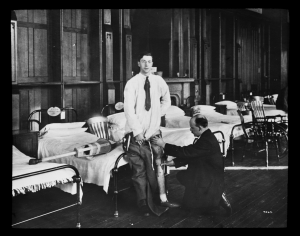
In one of the first humanities articles published on Wellcome Open Research, Dr Jennifer Novotny describes one of the founding and work of the Princess Louise Scottish Hospital for Limbless Sailors and Soldiers (now known as the Erskine) during what was then called the Great War. In discussion with us here, we find out a bit more from Dr Novotny about the history of the hospital, what lessons are still relevant today, and her experience of publishing in Wellcome Open Research.
Marta Teperek describes a new pilot project being undertaken at the University of Cambridge with the aim of finding out what can be done to bring about more open research practices.
Scientific publications are the main medium for sharing scientific results and assertions supported by observational data. Consequently, bioinformatics resources depend on research literature to keep the content updated; a task carried out by curators, who extract information from articles and transfer its essence to the corresponding resources. Therefore, services that support researchers and curators in browsing the content and identifying key biological concepts with minimal effort would be beneficial for the community.