By Guest Author
05 July 2017
Lived Lives: A Pavee Perspective was an artist-science collaboration project aimed at addressing suicide in the Irish Traveller Community. he results of this collaboration were published as a Research Article and openly peer reviewed on Wellcome Open Research. In this guest blog, researchers, Kevin Malone and Eimear Cleary, and artist, Seamus McGuiness, describe their work.
By Guest Author
10 April 2017
Researchers Irene Omedo and Philip Bejon explain how targeted malaria control could benefit the surrounding community and discuss the benefit of post publication peer review.
By Guest Author
06 March 2017
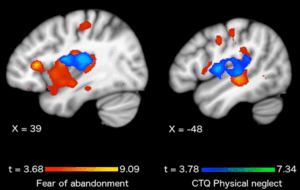
A recently published article by Dr Liana Romaniuk and colleagues investigated the neural correlates of fears of abandonment and rejection in borderline personality disorder. In this guest blog, Liana explains what they discovered about borderline personality disorder and the importance of open data.
By Guest Author
01 March 2017
In one of the first humanities articles published on Wellcome Open Research, Dr Jennifer Novotny describes one of the founding and work of the Princess Louise Scottish Hospital for Limbless Sailors and Soldiers (now known as the Erskine) during what was then called the Great War. In discussion with us here, we find out a bit more from Dr Novotny about the history of the hospital, what lessons are still relevant today, and her experience of publishing in Wellcome Open Research.
By Guest Author
14 December 2016
Professor Charles Bangham, Head of the Division of Infectious Diseases in the Faculty of Medicine at Imperial College London, recently published an article on the association of free serum haemoglobin with brain atrophy in secondary progressive multiple sclerosis on Wellcome Open Research. In this blog post he summarises the findings, what implications they have for the treatment of the disease and why he decided to publish the article on our platform.
By Guest Author
23 November 2016
‘Hepitopes’ is a new online resource, comprising a database of immune responses to Hepatitis B virus (HBV). We believe this will be an important resource for the HBV research community, with implications that range from characterising the basic science of virology and immunology, through to informing vaccine design and understanding clinical outcomes of infection. The database is designed as a live interactive resource that will evolve and develop over time, with improvements in the quality and content of the data, links to other tools and resources, and the potential to underpin scientific dialogue and new collaborations.