Antibiotics in Africa: Using storytelling and picture drawing for public engagement
| 28 March, 2022 | Bernard Appiah |
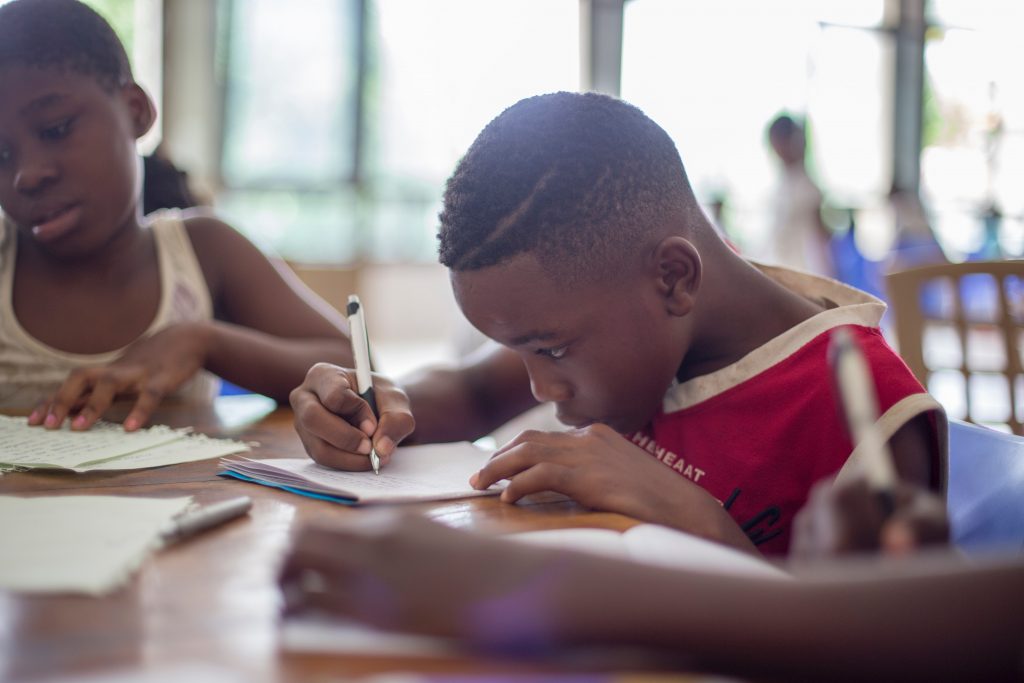
The inappropriate use of antibiotics can lead to antimicrobial resistance (AMR) – one of the most significant global health challenges. A key driver of antibiotic misuse is a lack of education around the subject. Therefore, finding ways to inform and engage the public on the correct use of antibiotics is critical in reducing rates of AMR. In particular, interventions delivered in schools have been effective in improving knowledge of the subject among schoolchildren, but the topic remains under-researched in low- and middle-income countries.
In this conversation with Bernard Appiah, Assistant Professor of Public Health at Syracuse University, we dig deeper into the novel approaches to public engagement explored in his recent Research Article on Wellcome Open Research. We discuss the use of storytelling and picture drawing as public engagement approaches to improve knowledge, attitudes, and beliefs about antibiotics in Africa, specifically among schoolchildren in Ghana.
Let’s talk about antibiotics in Africa – what’s currently being done to communicate, engage, and educate the public about AMR?
In Africa, we’re seeing a wide range of novel communication strategies for educating the public on antibiotics. These include quiz competitions, radio and television shows, theatre, and social media. What’s important when considering their effectiveness is that these strategies must be culturally appropriate in order to resonate with the intended audience.
For example, for most residents in rural Africa, radio is more accessible than television. So, this medium may be more appropriate to promote the correct use of antibiotics. Conversely, social media may be more appropriate for urban dwellers. It’s about finding a strategy that works for the community you’re trying to reach.
Why did you choose to examine storytelling and picture drawing?
We focused on storytelling because it is culturally appropriate in Africa. Growing up in rural Ghana, we used to sit around bonfires at night to tell stories from African folklore, so I knew storytelling was a strategy with potential. Plus, schoolchildren in Ghana already have art lessons that include drawing pictures. The two practices were also suggestions from schoolchildren from a previous similar project.
To the best of our knowledge, there are only a few existing studies on this topic – which enhances the novelty of our study. For instance, a recent Systematic Review on the subject identified 14 studies, yet none focused on Africa!
Why is it important to raise awareness and understanding among schoolchildren?
Schoolchildren are our future leaders. Educating them on correct antibiotic use is key to halting AMR.
In Africa, antibiotics are accessible in drugstores without prescriptions, which makes AMR more likely to spread. In the past, I used to work as a community pharmacist in Ghana. People would come to the pharmacy and demand antibiotics without a prescription (which pharmacists would refuse). But drugstores without pharmacists often give in to such requests, and such drugstores abound in Africa!
How easy would it be to carry this out in schools? Would teachers need to carry out extra work, on top of their regular teaching commitments?
We integrated the intervention into school activities to ensure it is achievable. Science teachers had a one-day training before receiving the curriculum for the intervention. We also provided customized books for the students (a drawing and an exercise book). Students were asked to draw pictures or write stories twice a week for 20-25 minutes. They also had free time to practice writing their stories and drawing pictures on AMR.
The research team evaluated the students’ work to reduce the workload on teachers. We had the buy-in of all teachers and the Parent-Teacher Associations of the two schools. This support contributed to the successful implementation of the project.
What did you learn about storytelling and picture drawing? Were the two equally effective in raising awareness and understanding?
We found both positive and negative results. Picture drawing had a negative effect on knowledge about antibiotic use in agriculture. Yet, the same intervention had a statistically positive effect on attitudes and beliefs. Storytelling positively influenced all three parameters, but this was not statistically significant.
So, on the whole, the intervention had mixed results. Both practices may contribute to influencing the attitudes, knowledge, and beliefs of schoolchildren, but modifications are required to make these tactics more effective. In the future, we should focus on providing content that addresses one health approach to AMR.
What impact could your research have?
Our project could improve public awareness, beliefs, and attitudes about antibiotics in Africa. Parents may not know about the potential dangers of misusing antibiotics – but if children become knowledgeable on the topic, they could even correct their parents.
Long term, we hope our study reaches more funders and policymakers. This could provide a starting point for using storytelling and picture drawing interventions to really tackle the AMR crisis in Africa.
One last question – what are the next steps in your research?
Thanks to Wellcome funding, we have generated the evidence to move us to the next stage. We have been disseminating the outcome of the project globally. For example, the project was among the Falling Walls Engage winners in 2019. We have the necessary information to test the intervention in several schools in Ghana, or even other African countries. Funding for socio-behavioral interventions like ours on AMR in Sub-Saharan Africa is scarce.
We are now looking for more opportunities to apply for funding to further test our approach. The extra resources will enable us to randomize schools into groups or clusters. We plan to include agriculture experts to deliver the intervention and help address knowledge about the use of antibiotics in agriculture and how this could influence AMR.
You can read the full Research Article and its peer review reports on Wellcome Open Research: ‘Children against antibiotics misuse and antimicrobial resistance: assessing effectiveness of storytelling and picture drawing as public engagement approaches’ >>