Community evaluations of a simple cookstove intervention in Malawi
| 18 August, 2022 | Dr. Sepeedeh Saleh |
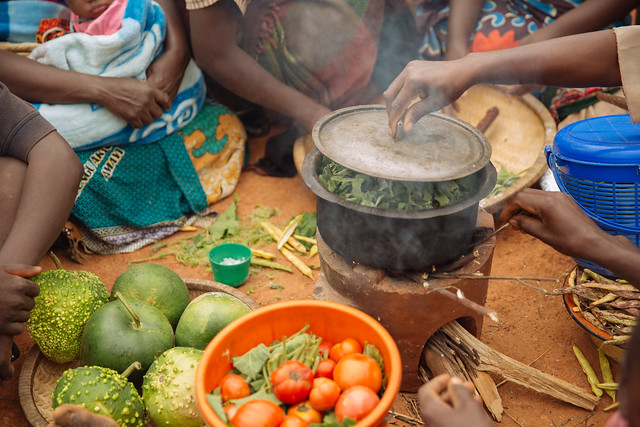
Air pollution exposure is responsible for a substantial burden of respiratory disease globally. Household air pollution from cooking using biomass is a major contributor to overall exposure in rural low-income settings.
In this conversation with Sepeedeh Saleh, Wellcome Trust Clinical PhD Programme Fellow, we discuss the use of a simple cookstove intervention in Malawi combined with ethnographic research to obtain richer insights on fuel and stove use practices and community perceptions. This topic is further explored in her Research Article on Wellcome Open Research.
Household air pollution
We focused on air pollution because of the gravity of the issue, globally. It’s considered the greatest environmental health risk, implicated in around 7 million deaths a year.
In rural areas of Southern Africa, household air pollution from cooking, heating, and lighting is a major component of this. Household air pollution also affects ambient air quality.
Communities in these areas face challenges with the transition to cleaner burning fuels. In Malawi for example, there has been little reduction in population rates of reliance on polluting fuels over the last 20 years. Around 99% of household energy use is met by biomass burning.
A mixed-method approach
Our research builds on insights from an ethnographic study exploring the wider contexts of cooking and smoke exposure in rural Malawi. Having direct access to community members’ perspectives enabled us to develop a relevant and sustainable intervention.
We also combined quantitative air quality monitoring with qualitative focused participant observation. This helped us learn what residents thought of the intervention.
Ethnographic research
We carried out ethnographic research before and after our actual intervention. This included extended participant observations, individual interviews, and participatory workshops.
Our fieldwork helped us draw insights into individuals’ life experiences in the village. We also found out that scarcity influenced air pollution exposures and individuals’ capacities to mitigate their exposures.
Scarcity affected exposures through three pathways: daily hardship, limitation, and precarity. Understanding the centrality of these exposure determinants helped us devise a context-responsive intervention.
A simple and sustainable cookstove intervention
Chitetezo mbaula
Three stone fires are commonly used for cooking across villages in Malawi. We provided locally-produced wood-burning clay cookstoves to all households in the village. The specific cookstoves are called ‘‘chitetezo mbaula’‘, which means ”protecting stove”. Non-governmental organizations have been promoting such cookstoves as cleaner alternatives to the three stone fire cooking method.
Evidence suggests that these stoves are not as efficient as ‘high-tech’ stove types. There are also speculations that they don’t reduce emissions as much as cleaner burning fuels would.
Yet, cooking with chitetezo mbaula is accessible and sustainable for families living in rural Malawi. The stoves come at a low price in the area, and they do not require purchasing additional fuel.
Findings
We found that the new stoves were well-liked and widely used by residents across the village.
Participants highlighted several benefits including fuel saving, and quicker heating and cooking. These were seen as priorities in residents’ daily lives.
Smoke exposure (perceptions of either increased or decreased smoke levels) did not feature in individuals’ evaluations of the stoves. Personal air quality monitoring revealed no significant difference in cooking-related emissions.
Limitations
Differences in the timing of the harvest from year to year also meant differences in fuel use. This compromised the comparability of exposure levels before and after the cookstove introduction.
This was an unavoidable limitation of the study. Yet, our qualitative findings around communities’ own views on the intervention remain relevant.
Potential impact of the research
One of the main aims of our project was to widen the discourse around interventions in global health. Our research shows the value of communities’ perspectives in developing and evaluating interventions. We hope that our work will inspire other research teams to involve communities in the settings where interventions will be implemented. We also want to encourage the integration of local knowledge in all stages of research.
Next steps
Our intervention study demonstrated how locally made cookstoves could improve individuals’ daily lives. Benefits included reductions in firewood consumption and cooking time.
Our research also showed the limitations of these cookstoves in terms of air pollution exposure. Evidence suggests that to reduce exposure, cleaner fuels and electricity are necessary. The real challenge is to overcome the associated structural barriers and make such fuels widely available in rural and low-income settings.
Lessons learned from our current project can serve as a starting point to overcome this challenge.
Choosing Wellcome Open Research as a publishing venue
We had a great publishing experience with Wellcome Open Research. We selected reviewers with relevant expertise in our research topic and received quick and clear feedback. Both reviewer input and our own responses were published alongside the article on the Platform. Communication with the editorial team was good and people were very responsive. The revised versions of our articles were also processed quickly and published openly on the Platform. This is definitely a route we will be taking with publications in the future.
You can read the full Research Article and its peer review reports on Wellcome Open Research: “We threw away the stones”: a mixed method evaluation of a simple cookstove intervention in Malawi >>
_______
Photo credit: IFPRI on VisualHunt