Divergent standards of human biobanks in Egypt could limit sharing of valuable biological resources
| 20 July, 2021 | Ahmed Samir Abdelhafiz |
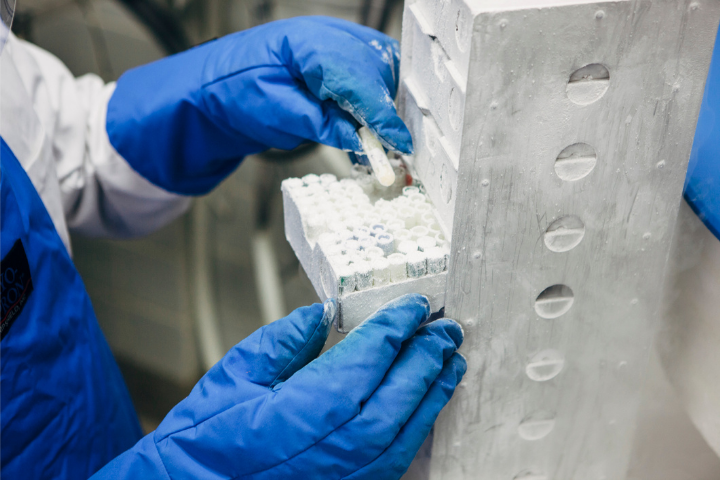
Biobanking is growing in Egypt. Biobanks are repositories, to collect, store and disseminate human biological samples and the related data for research. Although a relatively new field for the country, the concept has rapidly taken on, and Egypt has already established several biobanks in the last few years to advance its clinical and genomic research.
The problem is that each biobank has its own governance, ethics policies and operating procedures. Research ethics committees are concerned about the divergent standards and practices, so are calling for uniform ethical standards and safeguards to be put in place.
Ahmed Samir Abdelhafiz, Cairo University, discusses this in his Research Article published on Wellcome Open Research. In this blog, Ahmed tells us about his work on developing ethical guidelines for the Egyptian human biobanking. His recommendations could strengthen mutual trust between the public and researchers and improve management and sharing of the valuable biological resources and related data.
Recommendations for ethical guidelines
Eight human disease-based biobanks have been established in Egypt over the past few years, and the number is growing. These biobanks have relied mainly on international guidelines and best practices to develop policies and practices for daily activities as well as ethical governance. While these documents were useful as general sources or guidelines, differences in cultural, political and institutional policies could limit their use to some degree, which could limit sharing of samples and affect the collaboration between biobanks in different countries/settings. In addition, some guidelines may be a bit too general and may not be fit for use in low resource countries/settings.
Practical and ethical challenges
Egyptian biobanks are in different stages of maturity, and vary in their affiliations and positions in the hierarchy of the organization in which they are located. This variability affects the policies and procedures of the biobank, where less mature biobanks may not have clear policies about sharing and access of data and samples.
In addition, governmental based biobanks could be quite sensitive about commercialization issues, which may not be the case with private biobanks or those affiliated with NGOs. In order to build mutual trust with stakeholders, it is important to create uniform ethics policies and operating procedures, which should address the major points or questions according to the social, cultural, political situation in Egypt, while being flexible at the same time to allow individual biobanks to adjust these principles according to their needs and local institutional policies.
Respecting religious beliefs and practices
Religion is an important cultural issue in Egypt. The two main religions are Islam and Christianity, and Egyptian laws should not contradict the Quran and Islamic texts. Our previous studies showed that patients believing in the two religions didn’t think that donating samples for research in general contradicts their religious beliefs. It has not been reported that religion was a barrier against sample donation in Egyptian biobanks. Taken together, we don’t think that religion will present a barrier to biobanking activities in Egypt as long as autonomy, confidentiality, beneficence and non-maleficence values are respected.
Improving the quality of research
In our work, we studied the literature to choose some themes that may apply in Egypt, and can be used for the development of a national ethical framework. Based on this, we focused on six themes namely; informed consent, data protection, return of results, sharing of samples and data, community engagement, and stakeholder engagement. We analyzed international guidelines and best practices documents for these themes, and compared data published in them with the published ethical, legal and social issues (ELSI) documents about biomedical research in Egypt to reach best recommendations for a local national ethical framework.
A harmonious approach to build trust
According to our recommendations, we think that the practice of broad or tiered consent may be the best option and should harmonize among biobanks in Egypt. For return of research results, clear policies should be available about this issue, and training for genetic counselors and psychologists should be promoted. The national framework should enforce the engagement of the community as well as different stakeholders which is essential to enhance trust and build consensus about issues related to sample and data sharing across borders.
Sharing of samples and data as well as commercialization should be regulated by the law, which should protect public interests and the rights of local researchers on one side, but should not impede international research collaboration of scientific and social value on the other side.
We think that if these recommendations are taken into consideration from members of the biobanking community and policy makers, this national ethical framework will have a positive impact on biobanking activities and could enhance transparency and mutual trust with different stakeholders including the public, researchers, as well as policy makers. This will be reflected by greater participation and engagement from the public, and better use of biobanking services from researchers.
You can read the full Research Article and the peer review reports via Wellcome Open Research, ‘Recommendations for the development of Egyptian human biobanking ethical guidelines’ >>