A time of growth at Wellcome Open Research
| 16 May, 2018 | Abbie nicholson |
Michael Markie, Publisher at F1000, and Robert Kiley, Head of Open Research, Wellcome, update us on the latest innovations that have taken place on Wellcome Open Research so far this year.
The Wellcome Open Research platform has been publishing for 18 months now. In 2018, we’ve reached some new milestones as well as implemented some innovative developments, as such we thought it would be the perfect opportunity to provide an update on our recent activities.
What we’ve published
In April, we passed the 200 articles mark, which continues to demonstrate that Wellcome Open Research is a popular publication venue for Wellcome grantees. Submissions are increasing, as researchers begin to recognise the benefits – such as fast publication times and a transparent peer review process – of using this platform to share the results of Wellcome-funded research. Analysis of publication types shows that 64% of articles are traditional research articles, while the remainder represent lesser published outputs such as method articles, software tools, data notes and study protocols.
We also passed the 500th open peer review report milestone, all of which are open, named and fully citable. One of the reviewer benefits of our open review comes from our ORCID integration, and 25% of the reviews have been linked to the reviewers ORCiD profiles.
All articles, upon passing peer review, are now fully indexed in the Scopus database as well as PubMed, PMC and Europe PMC making this content even more discoverable.
Growing gateways and collections
Since the turn of the year, we have worked closely with Wellcome Centres and grantees to create dedicated hubs to publish, aggregate and showcase research outputs. Here’s some of our highlights:
- We’re working with Devi Sridhar and her team at the University of Edinburgh to publish and host a collection of articles on the role of the world bank on global public health.
- We’ve been working with Nazneen Rahman at the Institute of Cancer Research to create a gateway for the Transforming Genetic Medicine Initiative (TGMI), with publishing articles focusing on building the knowledge base, tools and processes needed to deliver genetic medicine.
- We’ve started a new pilot with ALSPAC, the world-leading birth cohort study, to make data more accessible and enable the wider research community to reuse rich datasets which they couldn’t do before.
- We’re working with the Francis Crick Institute to provide a place for their researchers to publish their research outputs and drive the open research movement at the institute.
- We’re working with colleagues in Africa and Asia to create their own gateways including:
– KEMRI-Wellcome Trust Research Programme (KWTRP)
– Oxford University Clinical Research Unit (OUCRU)
– Mahidol Oxford Tropical Medicine Research Unit (MORU)
– Malawi-Liverpool Wellcome Trust Clinical Research Programme (MLW)
– Wellcome Trust/DBT India Alliance
Researchers have found it extremely helpful to be able to create a space to showcase their work in a bespoke way that meets their publishing needs. As well as providing a central place to host research relating to a specific centre/project, the gateways and collections enables their owners to increase engagement around their centre or project. They can do this by pulling in news stories and hosting videos, while also giving our readers easy accessibility to even more related research; the TGMI gateway is a good example of this.
Article innovations
As well as being the first funder to use the invited, open peer review model on a publication platform, Wellcome are also working on ways to help grantees innovate in how they share and communicate their research. Below are some new innovations we’ve been working on:
- Registered Reports: We have been collaborating with our Advisory Board member Dorothy Bishop, University of Oxford, to introduce a novel Registered Report article type, which combines peer-reviewed pre-registration for the first time with invited, open peer review after publication. At the time of writing, the study protocol has passed peer review, so next up will be the analysis of the data collected. The additional transparency of this article type serves to further enhance the credibility of the results while lessening the likelihood of misguided practises such as p-hacking and publication bias.
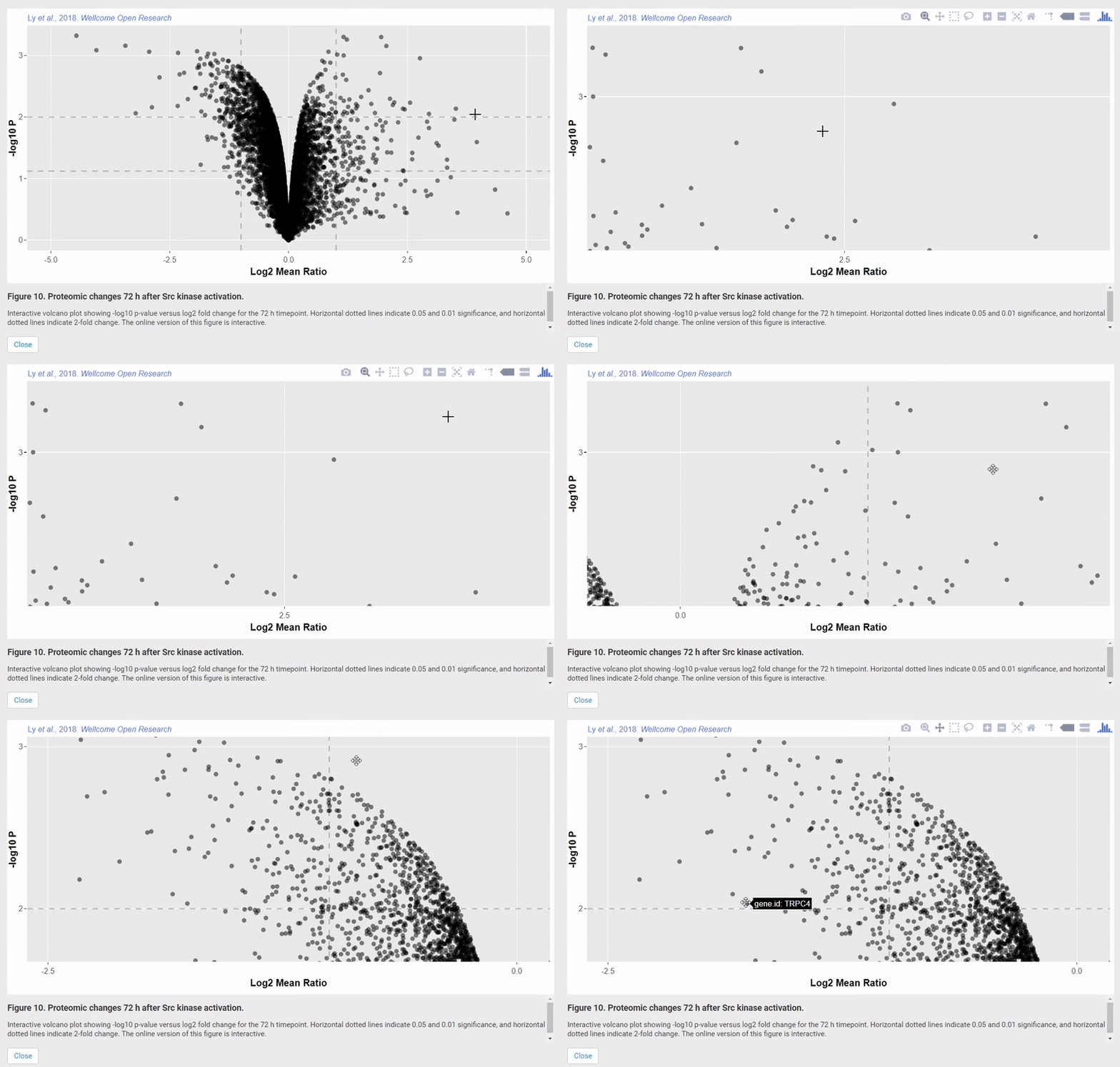
- Interactive Figures: We have worked with Tony Ly, University of Edinburgh, and Angus Lamond, University of Dundee, to include our first Plot.ly interactive figure (see image below). The article maps how a cells proteome is remodelled following oncogene-driven transformation and the interactive volcano plot, Figure 10 in the article, lets readers easily analyse how protein expression and protein turnover are affected by cell transformation, which helps brings the article to life.
- Reproducible Code: We are now working with Code Ocean to make the re-running analyses much easier by bringing it directly to the article. Via an in-article widget, readers can reanalyse and edit code to see how the results differ by changing the parameters, as well as being able to run the analyses on their own uploaded data. This is something that has already been running successfully on F1000Research for the past year.
The Wellcome research community is at the heart of everything we do, and so we will continue to listen, experiment and innovate to make ideas happen. If you have an idea or would like to see if your research could benefit from working with us please do get in touch; we’re very keen to push even more boundaries in the name of open research!